

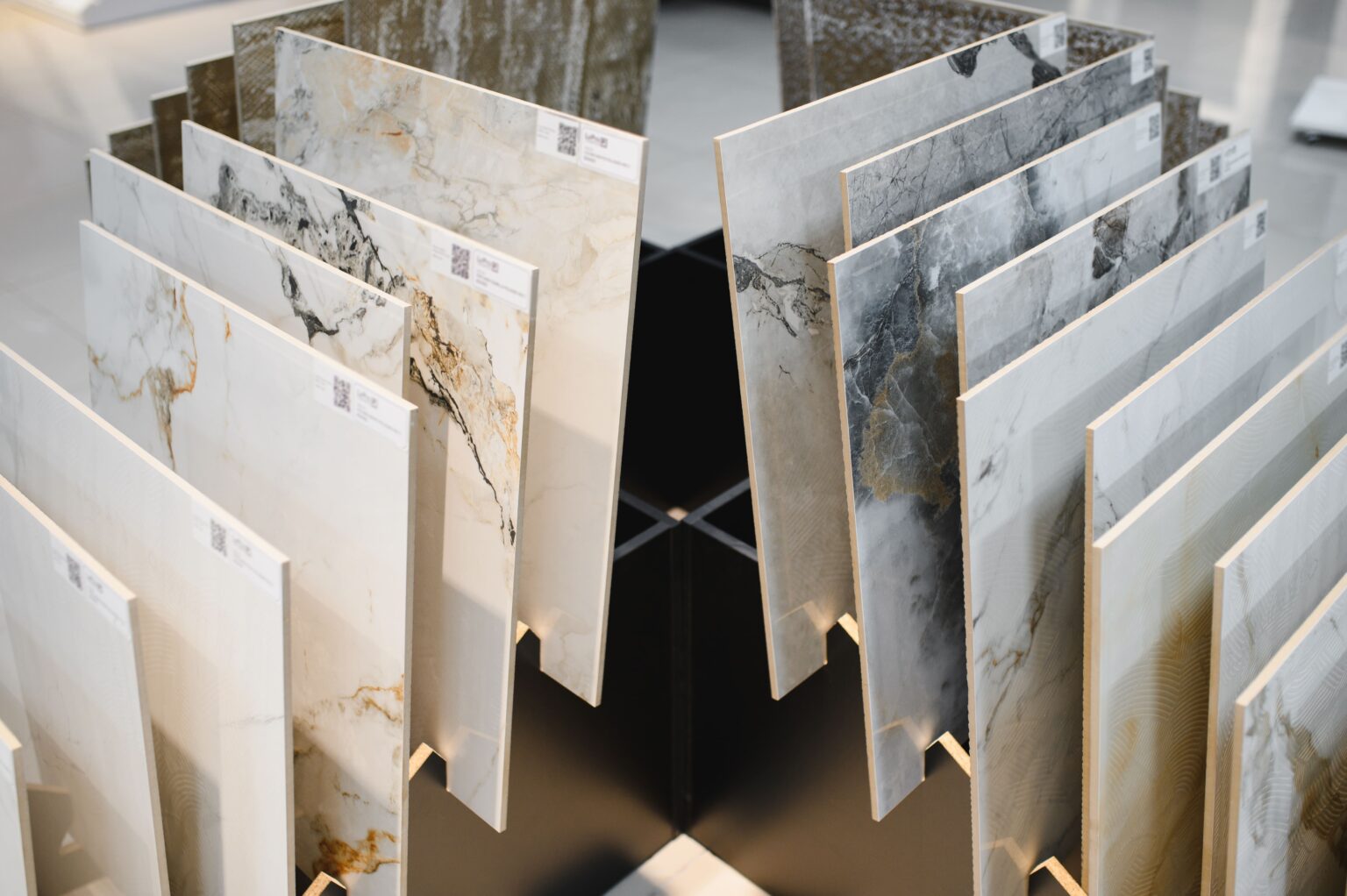
Quick Answer: Porcelain or Ceramic Tile?
When choosing between porcelain and ceramic tile for your kitchen or bathroom, the primary differences lie in their density, water absorption, and cost. Porcelain tile is fired at higher temperatures, making it denser, heavier, and virtually waterproof—making it the ultimate choice for high-moisture floors and heavy-traffic areas. Ceramic tile is slightly more porous and softer, offering greater budget flexibility and easier cutting, making it a fantastic, beautiful option for backsplashes and low-to-medium-traffic walls.
What Is Porcelain Tile?
Density and water resistance
Durability
Best uses
Porcelain is a specialized subset of ceramic tile made from finer, more densely packed clays and fired at extreme temperatures. This process results in a water absorption rate of less than 0.5%, making it frost-proof, highly impact-resistant, and impervious to moisture. It is the gold standard for shower floors, mudrooms, and bustling family kitchens.
What Is Ceramic Tile?
Cost flexibility
Design options
Best uses
Compare kitchens, bathrooms, showers, and backsplashes
Ceramic tile is made from red, white, or brown clay and kiln-fired, then glazed with durable colors and patterns. Because it is softer than porcelain, it is much easier for tile setters to cut, resulting in lower labor costs and boundless decorative design options. It is widely used for vertical surfaces like shower walls and decorative accents.
Porcelain vs Ceramic by Room
Kitchen floors
Bathroom floors
Shower walls
Backsplashes
- Kitchen Floors: Porcelain excels here. It withstands dropped cast-iron skillets, heavy foot traffic, and liquid spills without cracking or soaking up moisture.
- Bathroom Floors: Porcelain is strongly recommended due to its near-zero water absorption, preventing subfloor rot from splashes or leaks.
- Shower Walls: Both perform well, though porcelain offers superior protection in steam-heavy enclosures.
- Backsplashes: Ceramic shines here. Because backsplashes experience zero foot traffic and minimal moisture stress, ceramic allows you to enjoy stunning glazes and intricate patterns at a lower price point—explore inspiring designs in our tile backsplashes gallery.
Installation and Maintenance Differences
Cutting and labor
Grout and sealing
Long-term care
| Feature | Porcelain Tile | Ceramic Tile |
| Water Absorption | Extremely low (<0.5%) | Higher (absorbs more moisture) |
| Durability & Density | Extremely hard and dense | Softer, easier to cut and shape |
| Cost | Generally higher material and labor | More budget-friendly |
| Best For | Heavy traffic, outdoor, wet floors | Backsplashes, walls, light-duty floors |
Partnering with GS Kitchen & Bath
Whether you select porcelain or ceramic, the tile type is only half the equation. Professional surface preparation—such as flattening subfloors, applying waterproof membranes, and setting proper backer boards—matters just as much as the tile itself. At GS Kitchen & Bath, our master craftsmen in Birmingham, AL ensure every layer is installed with precision to guarantee a long-lasting, beautiful finish.
Ready to Plan Your Tile Installation?
Stop wondering which tile fits your space and let our team guide your selection. Contact GS Kitchen & Bath today to plan your tile installation and schedule your design consultation!
FAQ
Is porcelain tile better than ceramic?
Porcelain is superior in terms of water resistance, density, and durability. However, ceramic is often “better” for specific budgets or vertical decorative applications where extreme water-impermeability isn’t strictly required.
Which tile is best for bathrooms?
Porcelain tile is the best choice for bathroom floors and shower pans due to its moisture resistance, while ceramic tile works wonderfully on bathroom walls and backsplashes.
Is ceramic tile good for kitchen floors?
While high-grade ceramic can be used in kitchens, porcelain is generally preferred because kitchens experience heavy drops, rolling appliance loads, and frequent liquid spills.
Does porcelain tile cost more?
Yes, porcelain tile typically carries a higher material cost and requires specialized diamond blades and wet saws to cut, which can slightly increase installation labor compared to softer ceramic tile.