

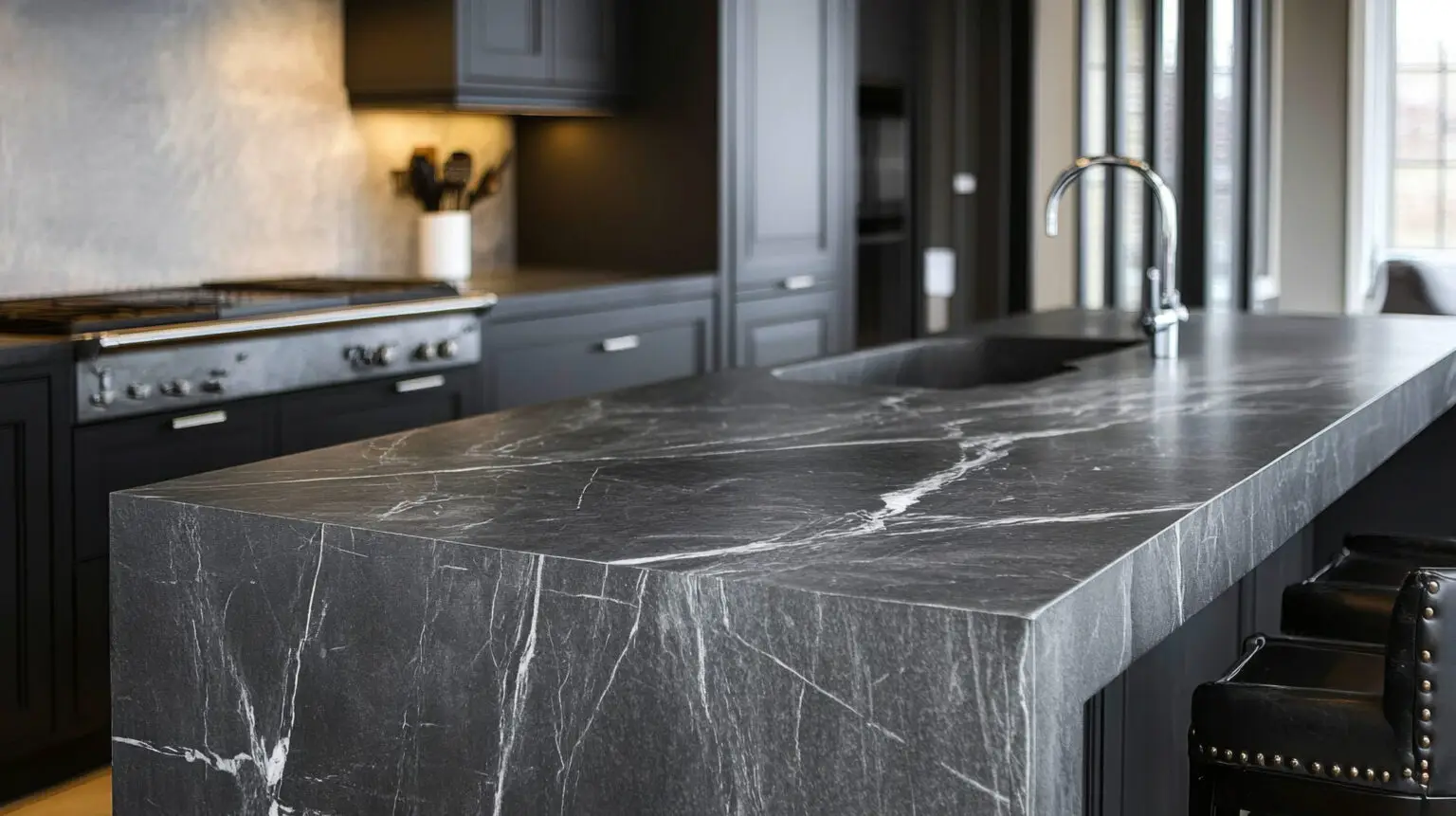
Choosing between quartzite and marble is a classic kitchen design dilemma. To the untrained eye, these two natural stones can look nearly identical, both offering those iconic, flowing veins and a luminous, high-end glow. However, beneath the surface, they are geological opposites.
At GS Kitchen & Bath, we see many homeowners fall in love with the look of marble, only to realize later that their lifestyle requires the “workhorse” durability of quartzite. Understanding the performance gap is key to ensuring your kitchen remains a joy, not a constant maintenance chore.
Quick Answer: Quartzite or Marble?
Choose Quartzite if you want the sophisticated, veined look of marble but need a surface that can withstand the daily rigors of a busy kitchen, including acidic spills and heavy traffic. Choose Marble only if you prioritize pure aesthetic perfection above all else and are willing to accept—or even embrace—the “patina” (the history of use) that develops on a softer, more delicate natural stone.
What Is Quartzite?
Quartzite is a natural metamorphic rock that begins its life as sandstone. Through intense heat and pressure deep within the earth, individual quartz grains recrystallize into an incredibly dense, hard, and interlocking structure. Because it is primarily silica-based, it is exceptionally tough and does not react to the acidic household ingredients (like lemon juice or vinegar) that plague other stones.
Tureks+ 1
What Is Marble?
Marble is a calcareous stone, primarily composed of calcium carbonate—the same mineral found in chalk and limestone. This chemical composition is what gives marble its signature soft, milky glow and fluid veining. However, because it is calcium-based, it is inherently soft and chemically reactive to acids, making it prone to “etching” (dull spots) and staining if not handled with care.
Imperial Stone Group+ 1
Quartzite Countertops: Pros and Cons
- Pros:
- High Durability: Ranks a solid 7 on the Mohs scale of hardness. It is highly resistant to scratches and chips.
Granite, Quartz & Quartzite Countertops+ 1 - Acid Resistance: Unlike marble, it does not etch when exposed to citrus, wine, or tomato sauce.
- Natural Beauty: Offers authentic, one-of-a-kind veining that engineered stones simply cannot replicate.
- High Durability: Ranks a solid 7 on the Mohs scale of hardness. It is highly resistant to scratches and chips.
- Cons:
- Higher Upfront Cost: Because it is so hard, it is difficult to cut and fabricate, which often increases labor costs.
Tureks - Sealing Required: While it is non-porous, it still requires periodic sealing (every 2–3 years) to keep it in peak condition.
Granite, Quartz & Quartzite Countertops
- Higher Upfront Cost: Because it is so hard, it is difficult to cut and fabricate, which often increases labor costs.
Marble Countertops: Pros and Cons
- Pros:
- Timeless Luxury: There is no substitute for the luminous, classic elegance of authentic Italian marble.
- Cool Touch: Excellent for baking (the reason it’s a favorite of pastry chefs).
- Cons:
- Etching Risk: Acidic substances will eat into the polish, leaving permanent dull spots.
- High Maintenance: Requires consistent sealing and careful cleaning with pH-neutral products only.
- Softer Surface: More susceptible to scratches, dings, and cracks from heavy kitchenware.
Comparison at a Glance
| Feature | Quartzite | Marble |
| Durability | Very High | Low to Moderate |
| Acid Resistance | High (Does not etch) | Low (Etches easily) |
| Maintenance | Low (Seal every 2–3 years) | High (Seal every 6–12 months) |
| Typical Cost | Moderate to High | High (Depends on rarity) |
Choosing the Right Fit for Your Lifestyle
- For Busy Kitchens: Quartzite is the clear winner. If you have children, pets, or enjoy frequent entertaining, quartzite allows you to cook without “worrying” about every spilled glass of wine or dropped lemon slice.
Legacy Marble & Granite+ 1 - For Resale Value: Both stones are highly prized, but Quartzite is often easier to sell to a wider pool of buyers because its “low-maintenance” reputation is a major selling point. Marble is a luxury choice that appeals to a specific buyer who understands and accepts its natural, lived-in character.
Tureks
FAQ
Is quartzite better than marble?
“Better” depends on your goals. Quartzite is objectively more durable and lower maintenance, making it the better choice for high-traffic kitchens. Marble is “better” only if you value its specific visual aesthetic above all else.
Legacy Marble & Granite
Does quartzite stain like marble?
No. Quartzite is significantly less porous and does not react to acids like marble does. While all natural stone should be sealed, quartzite is far more forgiving of accidental spills.
Tureks+ 1
Is marble too high maintenance for kitchens?
For many homeowners, yes. Marble requires a “different mindset.” If you cannot tolerate a faint ring from a lemon or a wine stain, marble will likely cause you stress in a functional kitchen environment.
Which countertop is more durable?
Quartzite is vastly more durable. On the Mohs hardness scale, quartzite ranks around 7, while marble sits at 3 or 4.
Superior Selected Stone+ 1
Is quartzite more expensive than marble?
It depends on the specific variety. While quartzite fabrication is more expensive due to its hardness, premium marble (like Calacatta) can be even more expensive than mid-range quartzite. Always compare specific slab pricing, as rarity drives the cost for both.
Ready to select the perfect stone for your home? At GS Kitchen & Bath, we help you navigate the nuances of natural stone to find the material that balances your aesthetic goals with your daily reality. Contact us today to schedule a design consultation and view our curated slab collection!
Thinking about a new countertop? Get your custom renovation guide here.