

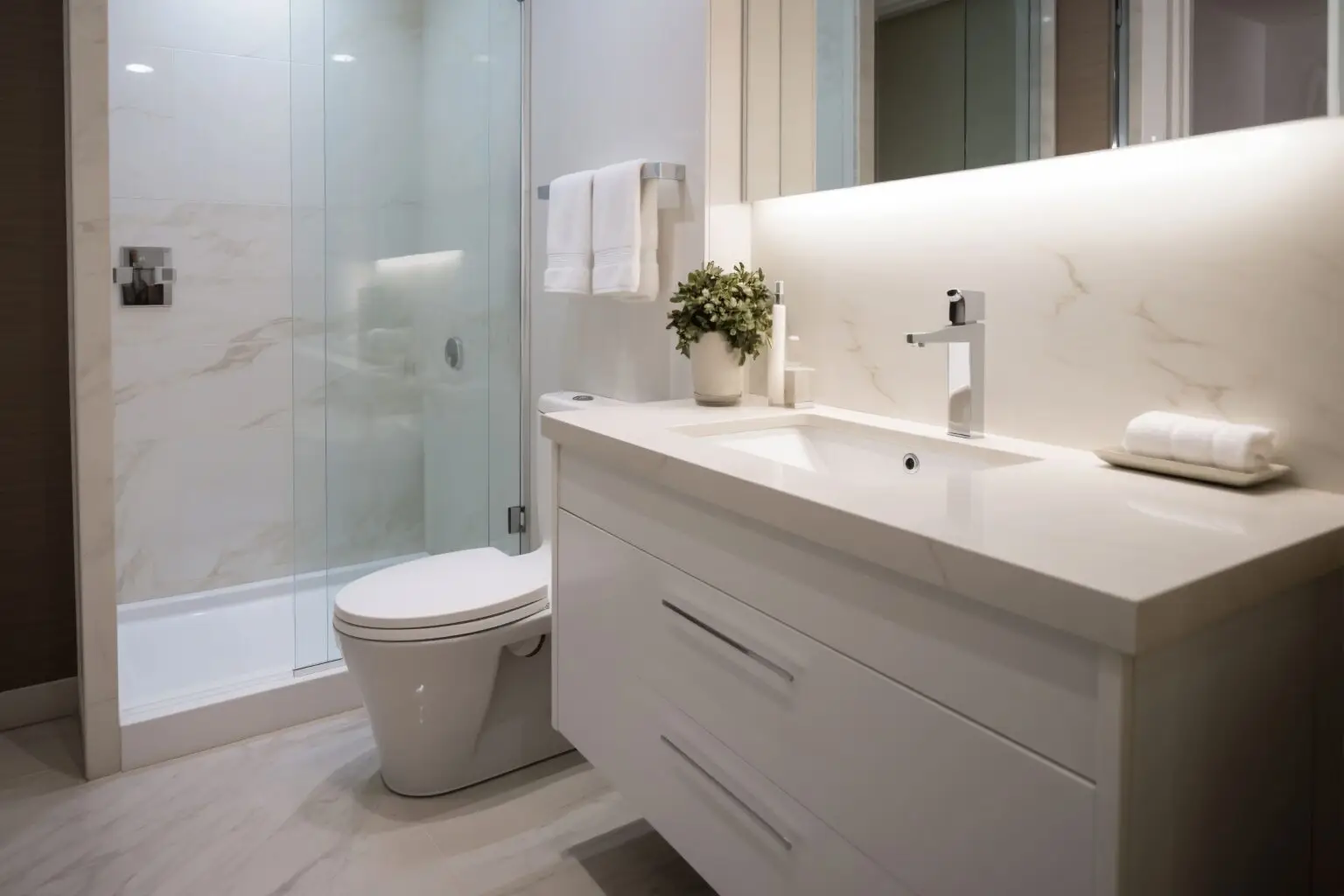
Your bathroom vanity is the workhorse of your daily routine. Because it sits in a high-humidity environment and faces daily splashes, the materials you choose are just as important as the design. At GS Kitchen & Bath, we emphasize a balance between structural durability—the cabinet itself—and the aesthetic, hygienic performance of the countertop.
Quick Answer: What Is the Best Material for a Bathroom Vanity?
For the vanity cabinet, plywood is widely considered the best overall material due to its superior moisture resistance and structural stability compared to solid wood or MDF. For the vanity countertop, quartz and solid surface (like Corian) are the top choices for 2026, offering a non-porous, low-maintenance, and hygienic surface that resists the mold and staining common in bathrooms.
Why Bathroom Vanity Material Matters
A bathroom vanity faces constant “micro-climates” of steam, splashes, and temperature fluctuations. Inferior materials, like standard particle board, will swell and delaminate when exposed to humidity. Choosing the right material prevents costly repairs down the line, keeps your bathroom hygienic, and ensures the vanity remains a focal point rather than a maintenance burden.
Best Materials for Vanity Cabinets
- Plywood: The industry “gold standard.” Its cross-laminated structure resists warping and expansion, making it highly reliable in high-humidity zones.
- Solid Wood: Offers the most premium look and can be refinished, but it is prone to movement (expansion/contraction) in humid bathrooms. Best used in well-ventilated master suites.
- MDF (Medium-Density Fiberboard): A cost-effective, smooth choice for painted vanities. Ensure it is specifically “moisture-resistant” grade and professionally sealed to prevent swelling.
- PVC: A “set-it-and-forget-it” option. It is entirely waterproof, making it a functional choice for kids’ bathrooms or spaces with poor ventilation, though it lacks the upscale feel of wood.
Best Vanity Countertop Materials
- Quartz: An engineered stone that is non-porous, extremely durable, and scratch-resistant. It requires zero sealing and comes in hundreds of colors.
- Solid Surface: A top choice for 2026. These seamless materials (like acrylic blends) can be integrated with your sink for a “one-piece” look that prevents water from ever touching a seam.
- Natural Stone (Granite/Quartzite): Extremely durable and heat-resistant, though it requires periodic sealing to maintain stain resistance.
- Marble: The ultimate luxury. Stunning to look at, but highly porous and sensitive to acidic toiletries (toothpaste, cleanser). Best for powder rooms where it won’t face heavy, daily use.
Comparison at a Glance
| Material | Durability | Moisture Resistance | Maintenance |
| Plywood | High | High | Low |
| Solid Wood | High | Medium | Moderate |
| MDF | Medium | Low to Medium | Moderate (if sealed) |
| Quartz | Very High | Very High | Very Low |
| Solid Surface | High | High | Low |
Choosing the Right Fit
- For Small Bathrooms: Opt for Solid Surface integrated countertops. They create a seamless, “quiet” visual that prevents a small room from feeling cluttered.
- For High-Traffic Family Bathrooms: Plywood cabinets paired with a Quartz top is the most robust combination. It handles the daily moisture of teenagers’ showers and the inevitable spills of family life.
- For Resale Value: Buyers gravitate toward Quartz countertops and Plywood-construction cabinets. These materials signal to potential buyers that the renovation was built to last, not just staged to look good.
Common Vanity Material Mistakes
- Using Standard Particle Board: Avoid standard, low-grade particle board vanity cabinets at all costs; they are the first to fail in a bathroom environment.
- Skipping the Sealant: If you use natural stone (marble/granite) or MDF, failure to seal them properly will lead to permanent stains and water damage within months.
- Mismatching Hardware: Ensure that your vanity material and hardware finishes (faucets, knobs) are compatible, particularly in “wet” areas where metal might corrode if not high-quality.
FAQ
What material is best for bathroom vanities?
Plywood is the best material for the vanity structure (cabinetry) due to its resistance to moisture and warping, while Quartz is the best material for the countertop.
Is MDF okay for bathroom vanities?
Yes, provided it is moisture-resistant grade and thoroughly sealed with a high-quality finish. It is an excellent choice for painted vanities, but avoid it in high-splash zones.
Is plywood better than MDF for bathrooms?
Generally, yes. Plywood is more durable and has a higher structural integrity when exposed to moisture over long periods, making it less likely to “blow out” if a leak occurs.
What vanity countertop is easiest to maintain?
Quartz and Solid Surface. Both are non-porous and do not require the routine sealing that natural stones like marble or granite demand.
What bathroom vanity lasts the longest?
A vanity built with a Plywood cabinet and topped with an engineered stone (Quartz) or Solid Surface will typically outperform all other combinations in terms of longevity and resistance to wear.
Planning your next bathroom upgrade?
At GS Kitchen & Bath, we specialize in durable, high-performance materials that look incredible and withstand daily use. Contact us today to schedule your design consultation and find the right vanity materials for your home!