

Quick Answer: What Deserves More of Your Budget
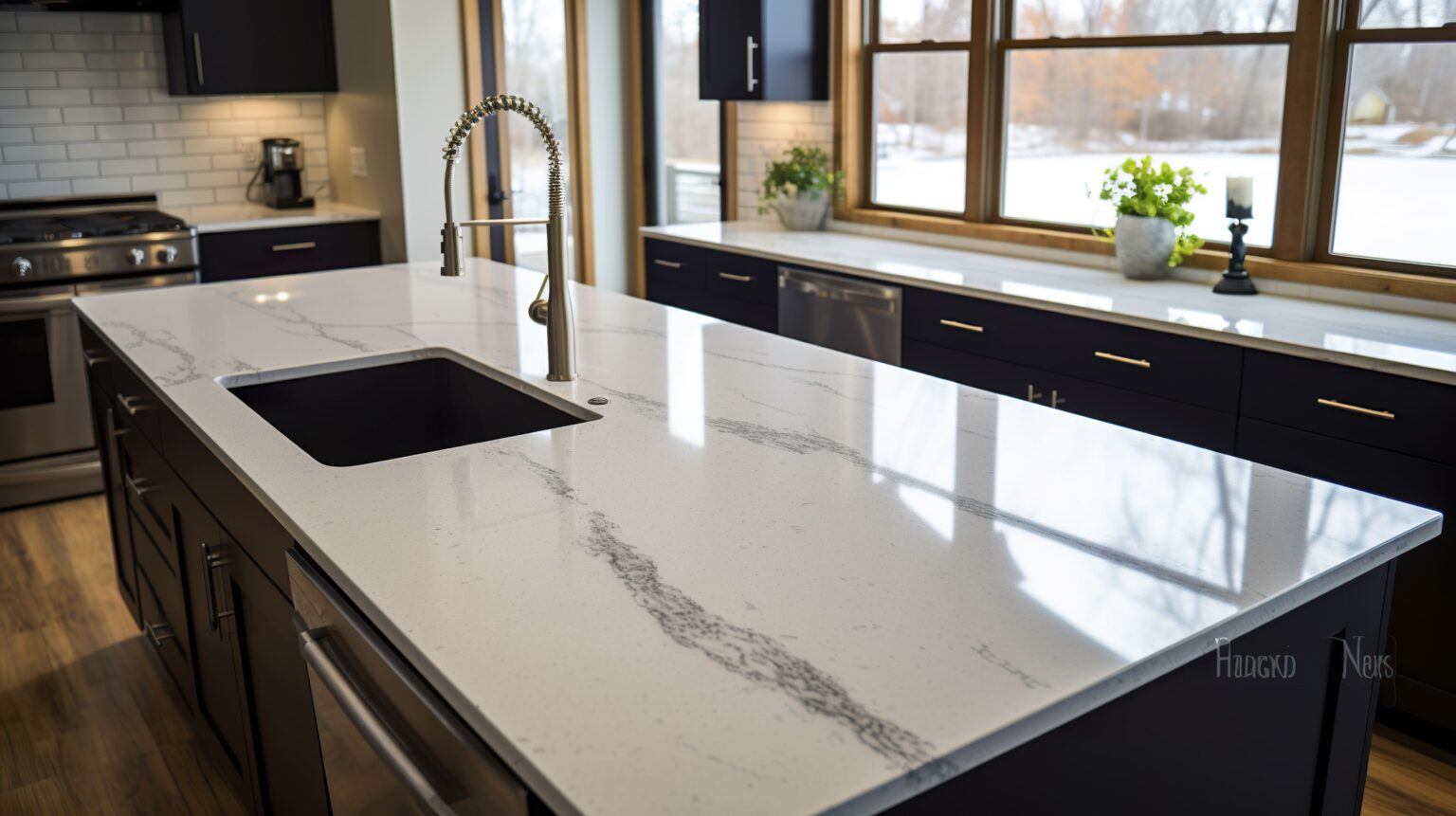
When choosing between quartz and granite countertops, your decision comes down to balancing natural authenticity with low-maintenance durability. Quartz is an engineered stone that offers a non-porous surface, consistent patterns, and zero required sealing, making it ideal for busy modern households. Granite is a 100% natural stone featuring unique mineral patterns, exceptional heat resistance, and timeless character, though it requires periodic resealing to maintain its protective barrier.
What Is Quartz?
Engineered composition
Non-porous surface
Design consistency
Quartz countertops are manufactured by combining approximately 90% to 94% ground natural quartz stone with polymer resins and pigments. Because it is engineered, quartz contains no microscopic pores or fissures, meaning it never needs to be sealed and resists staining from wine, coffee, and oils effortlessly. For practical care tips, explore our guide on How to Maintain Quartz Countertops.
What Is Granite?
Natural stone variation
Heat resistance
Sealing needs
Granite is quarried directly from the earth as solid stone slabs, meaning no two slabs are ever identical. It offers incredible natural beauty, earthy veining, and superior tolerance to high temperatures. However, because it is porous, it requires a protective sealant applied every 1 to 2 years to prevent moisture absorption and staining. If you are exploring other natural stone options, you may also want to read our comparison on Granite vs Marble Countertops.
Quartz vs Granite by Category
Cost
Maintenance
Heat resistance
Stain resistance
Style and resale appeal
| Feature | Quartz Countertops | Granite Countertops |
| Composition | Engineered stone (quartz + resin) | 100% natural quarried stone |
| Porosity | Non-porous (never needs sealing) | Porous (requires periodic sealing) |
| Heat Resistance | Good (can scorch from extreme heat) | Excellent (withstands high heat well) |
| Stain Resistance | Superior (resists liquids naturally) | Moderate (susceptible if unsealed) |
| Appearance | Highly uniform and predictable | Unique, one-of-a-kind natural patterns |
Best Choice by Homeowner Type
Busy families
Serious home cooks
Luxury stone lovers
Low-maintenance homeowners
- Busy Families & Low-Maintenance Homeowners: Quartz is the ultimate winner. Its zero-maintenance surface makes cleanup quick and worry-free. For more tailored ideas, read our guide on Best Countertops for Busy Families.
- Serious Home Cooks & Luxury Stone Lovers: Granite shines here. Serious cooks appreciate being able to place hot pans directly onto the stone surface without worry, provided they understand heat limits—learn more in our analysis on Are Quartz Countertops Heat Resistant. Meanwhile, lovers of authentic, one-of-a-kind natural beauty gravitate toward granite’s organic depth.
Partnering with GS Kitchen & Bath
Choosing the right countertop material is a pivotal step in any kitchen renovation. At GS Kitchen & Bath, our design and installation experts in Birmingham, AL help you weigh the visual appeal, durability, and maintenance requirements of both quartz and granite to find the perfect fit for your lifestyle and budget.
Ready to Compare Countertop Options?
Stop guessing which stone looks best in your space and let our team guide you through actual slab samples. Contact GS Kitchen & Bath today to compare countertop options and schedule your design consultation!
FAQ
Is quartz better than granite?
Neither is universally “better”—it depends on your priorities. Quartz is better for low maintenance and uniform patterns, while granite is better for natural uniqueness and extreme heat resistance.
Which countertop lasts longer?
Both quartz and granite are exceptionally durable, lifetime investments that can easily last for decades when installed and maintained correctly.
Does granite need sealing?
Yes. Because granite is a natural stone with microscopic pores, it requires periodic sealing (typically once a year) to protect it against stains and moisture absorption.
Which is better for a busy kitchen?
Quartz is generally preferred for very busy kitchens because its non-porous surface resists stains and bacteria naturally without requiring chemical sealants or special cleaning routines.