

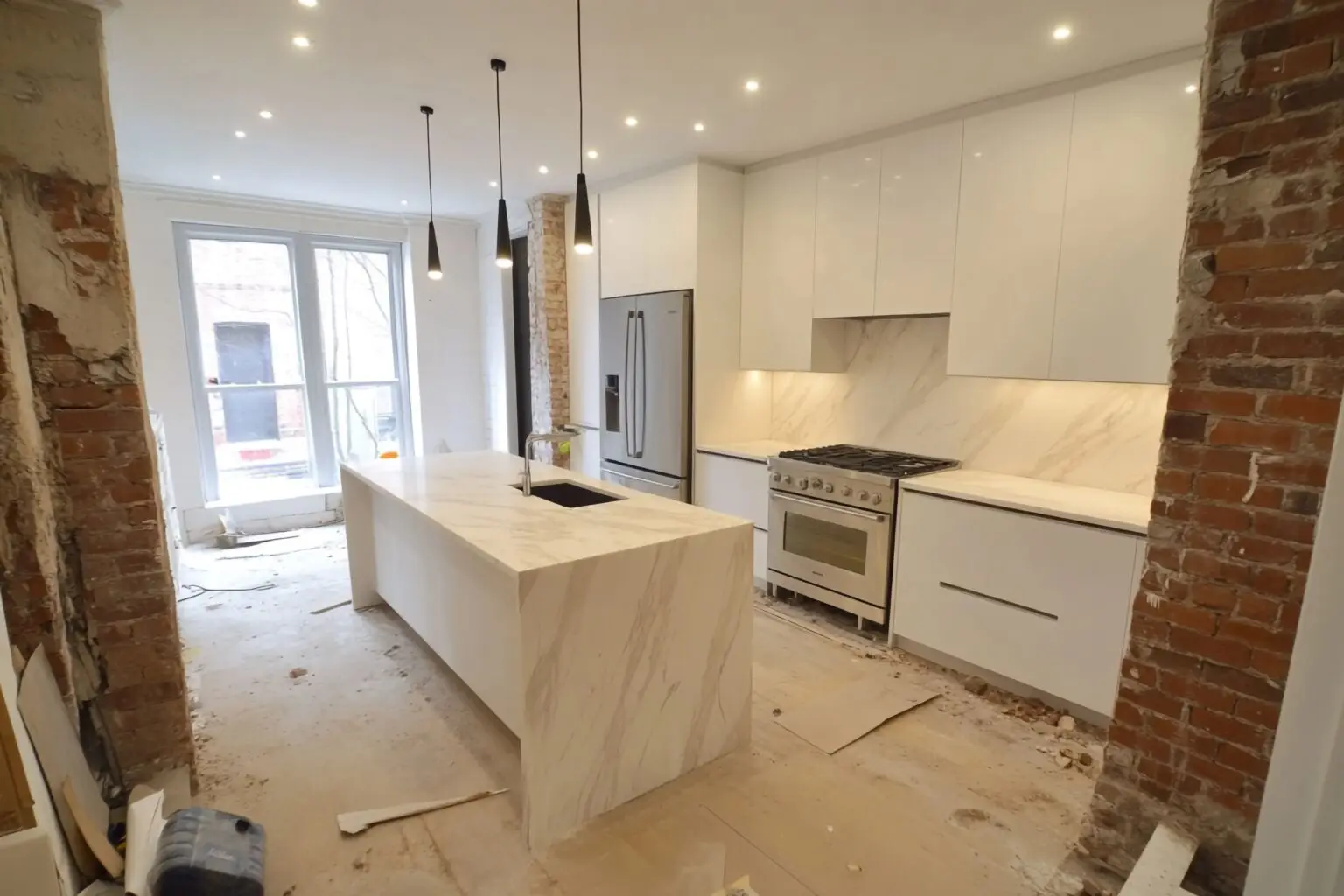
When you’re ready to transform your home, the most important decision you’ll make—even before picking out tile or cabinetry—is choosing the delivery method for your project. Should you hire an architect and a contractor separately (Traditional), or should you partner with a firm that handles everything under one roof (Design-Build)?
At GS Kitchen & Bath, we believe that transparency and communication are the pillars of a successful renovation. Here is how these two paths compare so you can choose the one that aligns with your stress tolerance and goals.
Quick Answer: Which Remodeling Process Is Better?
For most modern homeowners, Design-Build is the superior choice. It consolidates design and construction into a single, cohesive process, which significantly reduces the risk of miscommunication and delays. If you value efficiency, a predictable timeline, and a single point of accountability, choose Design-Build. If you prefer to manage every detail, have a favorite architect you already trust, or want to shop dozens of contractors to find the absolute lowest price, the Traditional route might be better suited to you.
What Is Design-Build Remodeling?
Design-Build is an all-in-one approach. You partner with a single firm—like GS Kitchen & Bath—that manages the entire project from initial architectural drawings and material selection to permitting and final construction. One team, one contract, one vision.
What Is Traditional Remodeling?
The Traditional approach (often called “Design-Bid-Build”) separates the phases. You first hire an architect or designer to create plans, then you take those plans to multiple contractors to “bid” on the project. Once you select a contractor, you are responsible for managing the relationship between the designer and the builder.
Design-Build Pros and Cons
- Pros:
- Single Point of Accountability: There is no “blame game.” If a design detail doesn’t work in construction, the team fixes it internally.
- Streamlined Communication: You don’t have to mediate between an architect who wants a beautiful design and a builder who wants to save money on structural costs.
- Faster Timelines: Design and construction are often integrated, allowing for faster problem-solving and overlapping phases.
- Cons:
- Limited “Shopping” Around: Once you commit to a Design-Build firm, you are usually committing to their team and process.
Traditional Remodeling Pros and Cons
- Pros:
- Maximum Vendor Flexibility: You can select a world-class architect for design and a separate master carpenter for the build.
- Competitive Bidding: You can invite three different contractors to bid on your final plans, which some homeowners feel helps secure the lowest price.
- Cons:
- The “Communication Gap”: Designers and builders often view projects through different lenses. If plans are ambiguous, the builder might stop work, leading to delays and “change orders” that increase costs.
- Higher Management Burden: You often become the “middleman” responsible for ensuring the builder is following the architect’s vision.
Cost Differences
Contrary to popular belief, Design-Build is not inherently more expensive. While a traditional bid might seem lower on paper, it often fails to account for “hidden” costs—such as design changes mid-construction because the builder didn’t understand the architect’s intent. Design-Build firms provide a more accurate price earlier in the process because the builder is involved in the design phase from day one, ensuring the plan is actually buildable within your budget.
Which Process Is Best for Kitchens and Bathrooms?
Kitchen and bathroom remodels are “high-density” projects. They involve complex coordination of plumbing, electrical, tile, and cabinetry. In these small, technical spaces, Design-Build is almost always more successful. Because the designer and the installer are on the same team, they can resolve plumbing or structural issues before they ever manifest as expensive delays on the job site.
How to Choose the Right Approach
- Choose Design-Build if: You want a professional partner to manage the complexity, you have a specific budget goal, and you want to ensure your design is 100% buildable.
- Choose Traditional if: You love managing the details yourself, you have a highly unique architectural vision that requires a specialized designer, or you have the time to act as the “general contractor” for the communication between your designer and your builder.
FAQ
What is design-build remodeling?
It is a project delivery method where a single firm provides both design and construction services, offering a streamlined process from concept to completion.
Is design-build more expensive?
Not necessarily. While the initial fees might cover both design and management, Design-Build firms often prevent cost overruns and delays caused by miscommunication, which can make the total project cost more predictable.
Is design-build better for homeowners?
For those who want a predictable process and a professional to manage the stress of renovation, yes. It eliminates the conflict often found between separate designers and builders.
What is the traditional remodeling process?
The “Design-Bid-Build” process, where you hire an architect/designer for plans first, and then conduct a competitive bidding process among contractors for construction.
Which remodeling process is faster?
Design-Build is generally faster. Because the team is integrated, planning for materials and construction can happen simultaneously, reducing the downtime between the design phase and the start of work.
Ready to start your remodel with a seamless, unified team? At GS Kitchen & Bath, we handle everything from the first sketch to the final coat of paint. Contact us today to schedule your design-build consultation!