

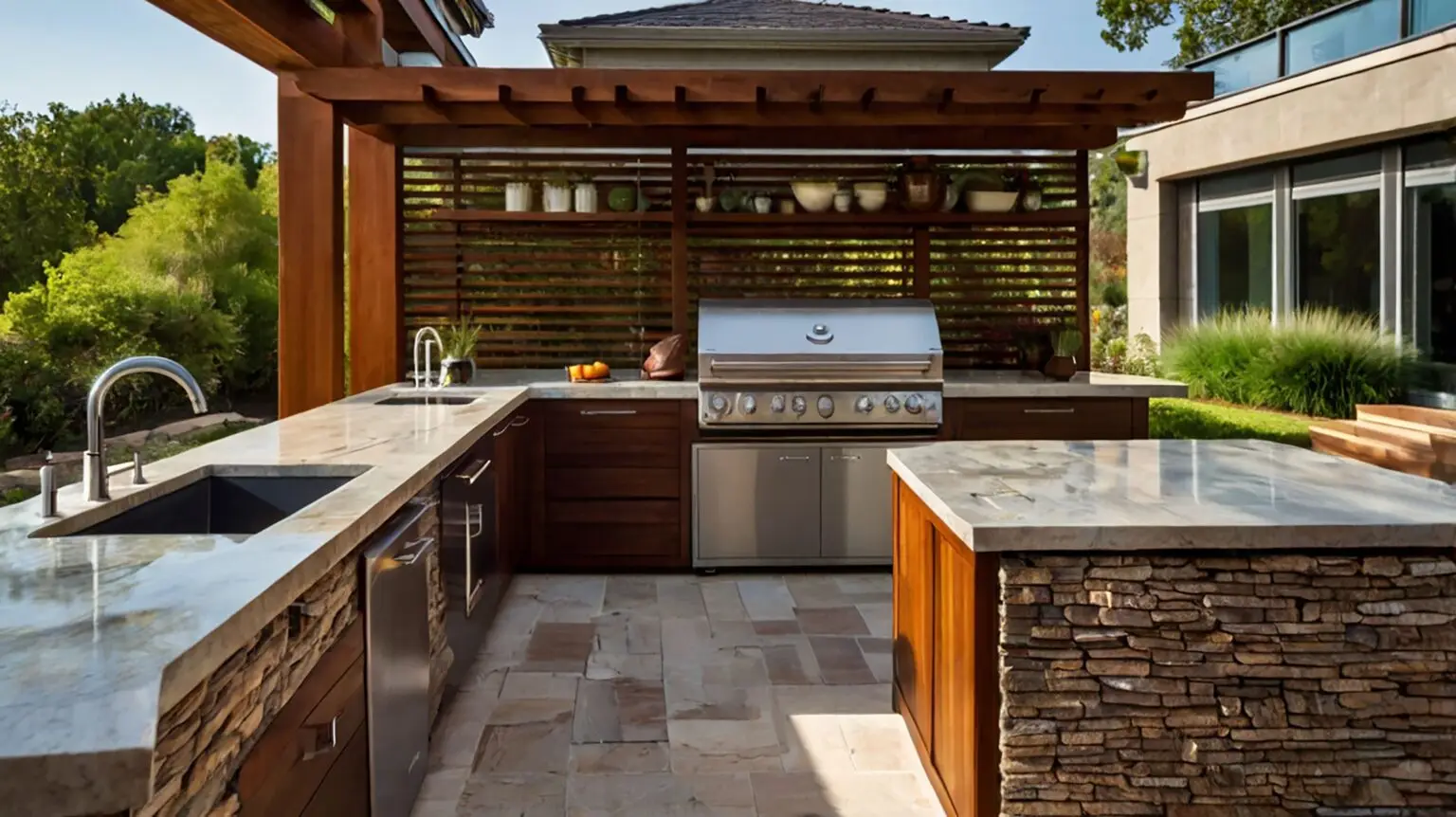
An outdoor kitchen works harder than any indoor space. It must endure direct UV rays, temperature swings, grease, moisture, and the occasional storm. Selecting the wrong material can lead to fading, cracking, or rapid staining, which is why durability and weather resistance are your top priorities.
At GS Kitchen & Bath, we recommend prioritizing materials that are inherently UV-stable and non-porous to ensure your outdoor kitchen remains as beautiful in five years as it is today.
Quick Answer: What Countertop Is Best Outdoors?
For most homeowners, Granite and Exterior-Rated Porcelain are the top-tier choices. Granite offers a timeless, natural stone look that handles extreme heat and UV exposure with ease, while Porcelain (often referred to as sintered stone) is the modern, virtually maintenance-free option that is completely non-porous and fade-resistant.
Why Outdoor Countertops Need Special Materials
Indoor countertops—especially engineered ones—often rely on resins or bonding agents that break down, discolor, or become brittle when exposed to sunlight and freezing temperatures. An outdoor material must be able to withstand the “freeze-thaw” cycle, resist intense UV radiation without fading, and handle the high heat emitted by grills and ovens.
Best Countertop Materials for Outdoor Kitchens
- Granite: The gold standard for outdoor longevity. It is naturally dense, heat-resistant, and won’t fade under the sun. It does require periodic sealing, but it stands up to the elements better than almost any other natural stone.
- Quartzite: An excellent alternative if you love the look of marble but need outdoor-level strength. It is exceptionally hard and scratch-resistant, though it still requires sealing.
- Porcelain (Sintered Stone): The “new” leader in outdoor design. These slabs are essentially baked at such high temperatures that they are impervious to UV rays, heat, and moisture. They are non-porous and require zero sealing.
- Stainless Steel: The professional’s choice. It is hygienic, heat-proof, and rust-resistant (if high-grade 304 or 316 is used). It is perfect for modern, industrial-style prep zones.
- Concrete: Great for custom shapes and an industrial aesthetic. It must be professionally sealed, and owners should be comfortable with a “patina” (natural color shifts and minor cracks) over time.
Countertop Materials to Avoid Outdoors
Note: Just because a material is popular indoors doesn’t mean it’s safe for the backyard.
- Quartz (Engineered Stone): Avoid. Most quartz contains resins that will yellow and degrade under direct UV sunlight. It can also become brittle and crack under extreme temperature fluctuations.
- Marble: Generally too porous and reactive to weather. It will etch and stain very quickly unless kept in a perfectly protected, shaded area.
- Butcher Block: It will likely warp, rot, or crack due to moisture and temperature changes, unless you are prepared for extremely high-level maintenance.
Performance Comparison: How They Handle the Elements
| Material | UV Stability | Heat Resistance | Maintenance |
| Granite | Excellent | Very High | Periodic Sealing |
| Porcelain | Superior | High | Minimal |
| Stainless Steel | High | High | Easy (wipe down) |
| Concrete | Moderate | High | Regular Sealing |
Outdoor Kitchen Design and Installation Tips
- Think About the Sun: If your kitchen is in direct afternoon sun, avoid dark-colored granites, which can become too hot to touch. Opt for lighter tones to keep the surface cool.
- The “Cover” Factor: Even the best materials last longer if they are kept under a covered patio or protected by a high-quality furniture-grade cover during the off-season.
- Fabrication Matters: Outdoor stone needs to be properly supported, especially around heavy grills. Ensure your contractor uses outdoor-rated adhesives and proper structural supports.
FAQ
What countertop is best for outdoor kitchens?
Granite and porcelain are widely considered the best options because they offer the perfect balance of extreme durability, heat resistance, and long-term weather stability.
Can quartz be used outdoors?
Generally, no. Standard indoor quartz contains resins that will yellow, fade, and weaken when exposed to UV sunlight and outdoor temperature swings. Only use it if the manufacturer specifically provides an exterior-rated warranty.
Is granite good for outdoor countertops?
Yes, it is one of the most reliable natural materials for the outdoors. It is dense, heat-resistant, and—provided you choose a slab with low iron content to avoid rust—it will last for decades.
What countertop handles heat best?
Porcelain and Stainless Steel are arguably the most heat-tolerant. Porcelain is fired at extremely high temperatures during manufacturing, making it nearly impervious to heat from hot pans.
What is the easiest outdoor countertop to maintain?
Porcelain is the winner. Because it is non-porous and UV-stable, it does not require the sealing that natural stone like granite or concrete demands.
Planning the perfect outdoor kitchen?
At GS Kitchen & Bath, we help you select materials that survive the seasons so you can focus on the food. Contact us today to schedule your design consultation and bring your outdoor vision to life!
Looking for design inspiration for your patio? View our Outdoor Kitchen Gallery.