

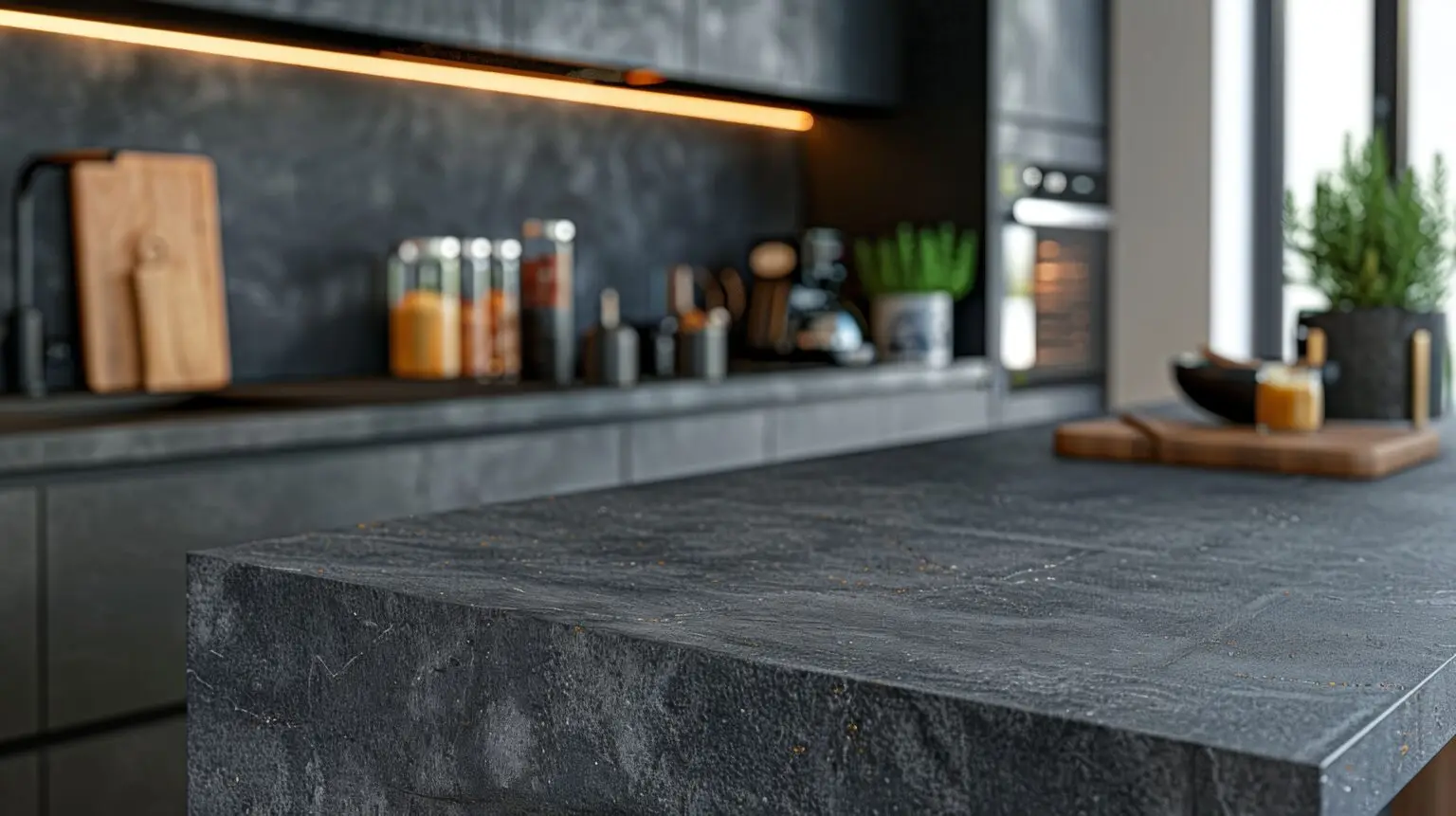
Choosing between a leathered and polished finish is more than a style preference—it’s a choice that defines how your kitchen feels and how much work you’ll put into maintaining it. At GS Kitchen & Bath, we find that most homeowners lean toward one or the other based on their personal “tolerance” for everyday upkeep versus their desire for a specific aesthetic.
Quick Answer: Leathered or Polished Granite?
Choose Polished Granite if you want the classic, high-shine kitchen look that is easy to wipe down and maximizes light reflection. Choose Leathered Granite if you have a busy household, prefer a natural and tactile feel, and want a surface that excels at hiding fingerprints, water spots, and daily kitchen messes.
What Is Leathered Granite?
Leathered granite (or “brushed” granite) is created by running diamond-tipped brushes over the surface of the stone. This process removes the stone’s natural surface imperfections and softens the sheen, resulting in a matte or low-luster finish with a unique, slightly pebbled texture that mimics the feel of aged leather.
What Is Polished Granite?
Polished granite is the industry standard. It is ground and buffed to a high-gloss, mirror-like finish. This process closes the pores of the stone more tightly than any other finish, which highlights the granite’s intricate colors, depth, and veining while creating a perfectly smooth, reflective surface.
Leathered Granite Pros and Cons
- Pros:
- Low Maintenance: Excellent at hiding fingerprints, water spots, and smudges.
- Tactile Appeal: Feels natural and warm to the touch.
- Stain Resistance: The brushing process often tightens the pores of the stone, making it surprisingly resistant to stains.
- Unique Aesthetic: Provides a high-end, custom, and rustic look that differentiates your kitchen from standard builds.
- Cons:
- Cleaning Nuance: While it hides smudges well, the textured surface can occasionally trap fine crumbs or dust, requiring a thorough wipe-down rather than a quick swipe.
- Cost: The extra labor involved in the “leathering” process makes it a premium, slightly more expensive finish.
Polished Granite Pros and Cons
- Pros:
- Timeless Shine: The reflective surface acts like a mirror, bouncing light around the kitchen and enhancing the stone’s color and veining.
- Ease of Cleaning: The smooth surface is the easiest to wipe down; spills glide across it effortlessly.
- Cost-Efficient: It is the standard finish and usually comes at the lowest price point.
- Cons:
- Shows Everything: The high-gloss surface acts as a spotlight for every fingerprint, streak, and water drop, which can become frustrating in high-traffic family kitchens.
Comparison at a Glance
| Feature | Polished Granite | Leathered Granite |
| Finish | High-gloss, reflective | Matte, textured |
| Maintenance | Easy to wipe, but shows marks | Hides marks, but requires more thorough wiping |
| Style | Formal, elegant, classic | Natural, organic, rustic/modern |
| Cost | Standard/Most affordable | Premium/Slightly higher |
Which Finish Is Easier to Maintain?
It depends on your definition of “maintenance.” If you define it by how often you have to clean, leathered granite wins—it hides the “signs of life” (crumbs, smudges, prints) much better. If you define it by how effortless it is to wipe, polished granite wins—a single pass with a cloth leaves it sparkling, whereas textured leathered granite may require a bit more attention to ensure crumbs aren’t left in the subtle grooves.
Which Finish Is Better for Kitchens?
For the “Busy Family Kitchen”: Leathered is often the superior choice because it allows the kitchen to look clean even when you haven’t wiped the counters in a few hours.
For the “Showpiece Kitchen”: Polished is the undisputed champion. If your kitchen is primarily for entertaining or you want to highlight dramatic stone veining, the high-gloss shine is visually unbeatable.
Which Finish Adds More Resale Appeal?
Polished granite appeals to the broadest base of buyers because it’s the “classic” choice that people associate with luxury. However, Leathered granite is a powerful differentiator for high-end or custom homes. It signals to buyers that you invested in a premium, designer-curated finish, which can make your property stand out in a competitive market.
FAQ
Is leathered granite hard to maintain?
No. In fact, most homeowners find it easier to live with because it doesn’t show everyday smudges. You just need to ensure you wipe it thoroughly to catch crumbs in the texture.
Is polished granite outdated?
Not at all. While leathered and honed finishes are trending for their modern, natural feel, polished granite remains a timeless choice that feels professional, clean, and elegant.
Which granite finish is best for kitchens?
If you cook daily and have kids, leathered is often the more practical choice. If you prefer a polished, formal look, polished is the best choice.
Does leathered granite need sealing?
Yes. Like all natural granite, leathered surfaces should be sealed periodically (typically every 1–5 years) to ensure they remain stain-resistant.
Is leathered granite more expensive?
Yes. Because it requires a more labor-intensive finishing process with specialized diamond-tipped brushes, it is considered a premium upgrade compared to the standard polished finish.
Still debating between the shine and the texture?
The best way to decide is to see the stone in your own light. Contact GS Kitchen & Bath today to schedule a showroom visit, where you can touch and compare both finishes yourself!