

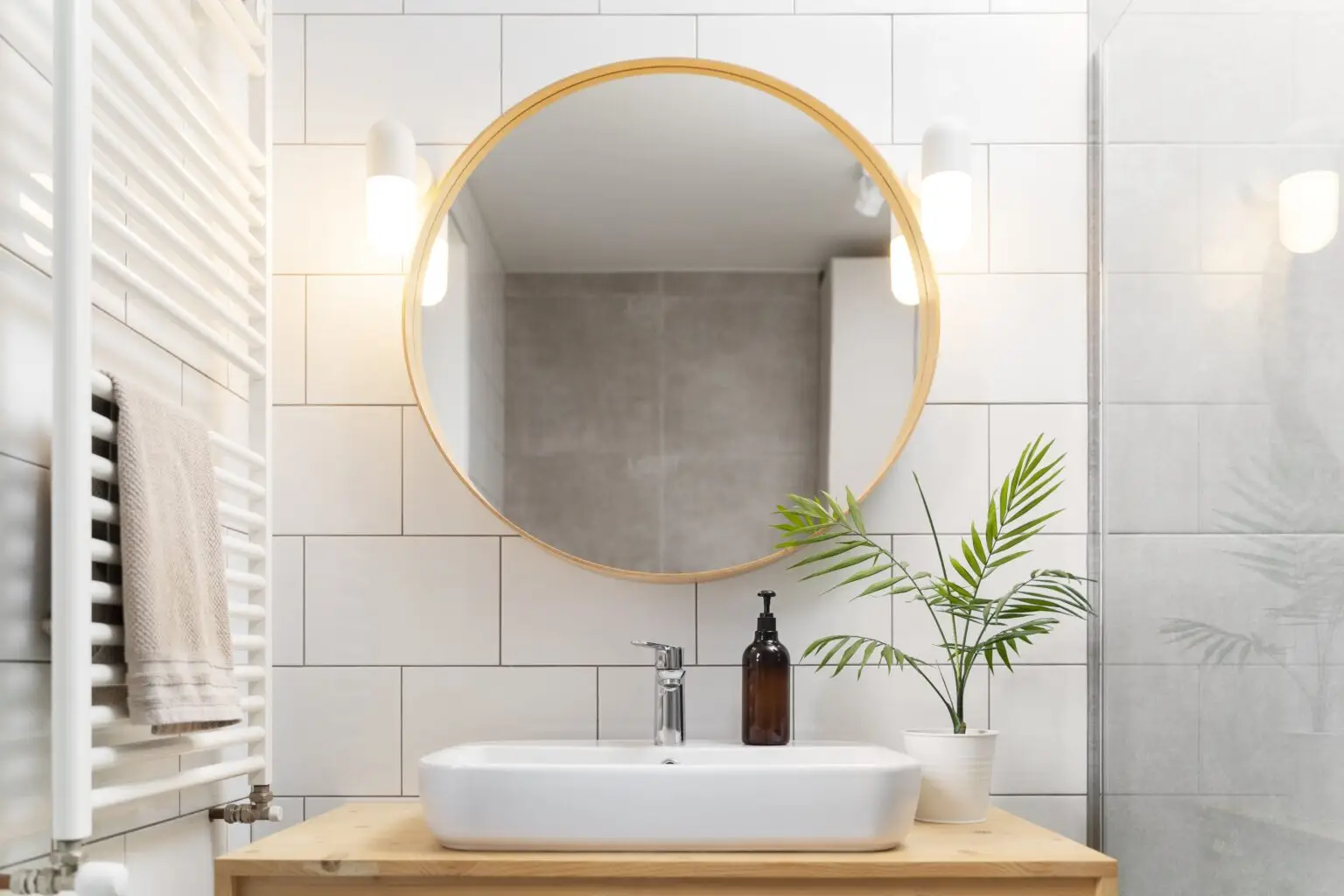
The bathroom mirror is more than just a place to check your reflection; it is a design powerhouse that can transform the lighting, perceived size, and overall mood of your space. Whether you are aiming for a minimalist sanctuary or a high-tech smart bathroom, choosing the right mirror requires a careful balance of proportion, placement, and functionality.
Quick Answer: What Size Bathroom Mirror Should You Choose?
Follow the “Two-Thirds Rule”: your mirror should ideally be approximately two-thirds the width of your vanity. For example, if you have a 36-inch vanity, a 24- to 32-inch mirror provides a balanced, intentional look. If you are aiming for a modern, expansive feel, you can go slightly larger, but avoid mirrors that are wider than the vanity itself, as they can make the wall look unanchored.
Why Bathroom Mirrors Matter in Design
Mirrors are the ultimate “cheat code” for interior design. They reflect light, making small or windowless rooms feel twice as large, and they act as the primary focal point of the bathroom. Beyond aesthetics, the right mirror solves functional problems, such as providing integrated lighting for makeup or hidden storage for daily essentials.
How to Choose Bathroom Mirror Size
- Mirror Width: Aim to align the width with your vanity. While the two-thirds rule is the gold standard for balance, a mirror that matches the vanity width exactly creates a sleek, custom look. Just ensure you leave 1–2 inches of “breathing room” on each side if you want it to look centered and framed.
- Mirror Height: The center of the mirror should sit roughly at eye level for the primary user (typically 57–65 inches from the floor). Leave a gap of about 6–10 inches between the top of your faucet or countertop and the bottom of the mirror.
- Vanity & Wall Space: If you have a double vanity, you have two choices: use two separate mirrors centered over each sink (which adds symmetry and personal space) or one large, expansive mirror that spans the entire width of the vanity (which maximizes light and openness).
Mirror Styles & Configurations
- Framed vs. Frameless: Framed mirrors add character and structure; choose a finish (like matte black or brushed brass) to coordinate with your faucet and hardware. Frameless mirrors offer a clean, minimalist, and “invisible” look that makes a bathroom feel more spacious.
- Shape:
- Round/Oval: Softens the hard edges of tiles and cabinetry; currently the top choice for modern, spa-like, and “Japandi” styles.
- Rectangular: A timeless, classic choice that feels structured and organized.
- Arched/Pill-Shaped: The “it” shape for 2026. It adds height and a touch of organic elegance to the room without being too sharp.
- Medicine Cabinets: Do not overlook the power of hidden storage. Modern medicine cabinets are now virtually indistinguishable from decorative mirrors, offering a sleek way to declutter your counters.
Lighting & Placement Tips
- Layer Your Light: If your bathroom relies on a single overhead light, your face will be cast in shadow. Pair your mirror with side-mounted sconces at eye level, or opt for an LED-backlit mirror to provide a flattering “halo” of light that illuminates the face evenly.
- Anti-Fog Technology: In 2026, a built-in demister is no longer a luxury—it’s a standard. It prevents streaks and improves safety by ensuring your mirror is always crystal clear after a hot shower.
Common Bathroom Mirror Mistakes
- Choosing a Mirror That Is Too Small: A tiny mirror over a massive vanity looks lost and “cheap.” When in doubt, go slightly larger.
- Mounting Too High: If you have to stand on your tiptoes or crouch down to see your reflection, the installation is a failure.
- Ignoring Electrical Safety: If you choose a smart or LED mirror, ensure it is hardwired by a professional and uses moisture-rated (IP-rated) components.
- Forgetting Clearances: Always double-check your faucet height and light fixture placement before drilling. You don’t want a beautiful mirror to be blocked by a low-hanging light or a tall faucet spout.
FAQ
How big should a mirror be over a vanity?
Aim for about two-thirds the width of the vanity for a balanced look. For a single sink, matching the width is also an excellent, high-end option.
Should a bathroom mirror be wider than the vanity?
Generally, no. It can make the vanity look undersized and the wall look “heavy.” It is better to keep the mirror slightly narrower than or equal to the width of the vanity.
Are round mirrors good for bathrooms?
Yes. They are currently one of the most popular choices because they “soften” the room’s hard surfaces (tiles and stone), making the bathroom feel more relaxed and spa-like.
Should bathroom mirrors be framed?
That is a style preference! Frames are great for adding a “design statement” or matching your bathroom hardware. If you want a minimalist, light-filled look, go frameless.
What mirror shape makes a bathroom look bigger?
Frameless, large-format rectangular mirrors, or tall arched mirrors. These shapes maximize light reflection and draw the eye upward, creating an illusion of height and space.
Need help selecting the perfect mirror for your renovation? At GS Kitchen & Bath, we help you choose mirrors that serve as the perfect finishing touch to your design. Contact us today to schedule your design consultation!