

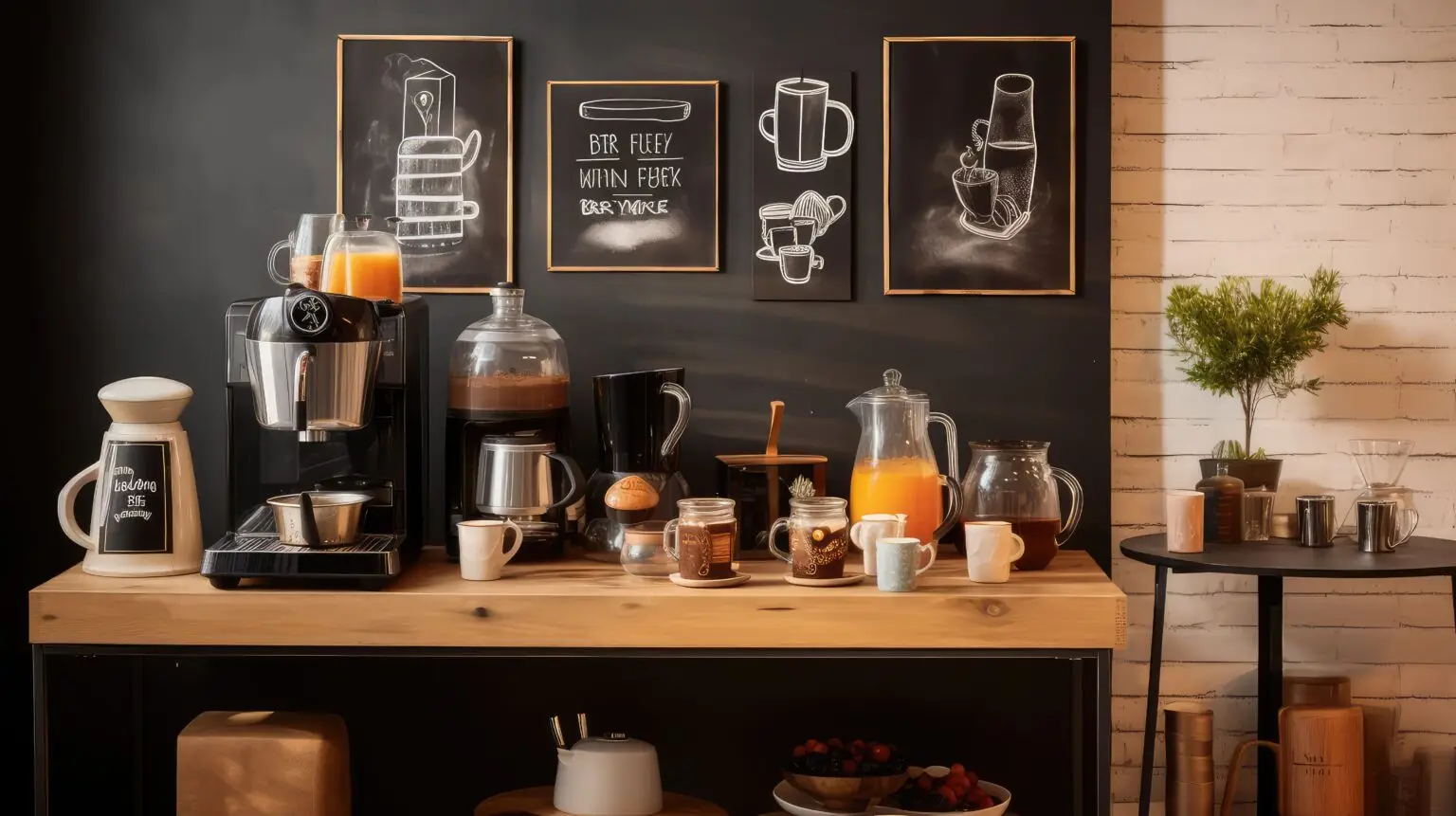
The home coffee bar has evolved from a simple countertop corner into a dedicated “morning sanctuary.” Whether you are a casual drip-coffee drinker or a full-blown espresso enthusiast, a well-planned coffee station can streamline your routine and declutter your primary kitchen workspaces. At GS Kitchen & Bath, we specialize in integrating these custom zones to ensure they feel like an intentional part of your kitchen’s architecture, not an afterthought.
Quick Answer: What Should a Home Coffee Bar Include?
A functional coffee bar requires three pillars: proximity, power, and storage. You need a dedicated surface for your machine, easy access to water (a nearby sink or water line), multiple grounded electrical outlets, and organized storage for your beans, mugs, and syrups.
Why Coffee Bars Are Popular
Coffee bars clear the “clutter-magnet” areas of your kitchen. By consolidating your coffee maker, grinder, mugs, and sugar bowls into one dedicated station, you keep the rest of your kitchen counters pristine for meal prep. It also creates a “self-service” zone, allowing family members or guests to grab a cup without getting in the way of the cook.
Best Places to Put a Coffee Bar
- Butler’s Pantry: The gold standard. A secondary prep space keeps the mess separate from the main kitchen.
- Unused Countertop Area: A “dead corner” that is rarely used for meal prep is an ideal candidate.
- Appliance Garage: A clever way to keep the bar visible when you want it and hidden behind a door when you don’t.
- Kitchen Nook: Transform a small breakfast area into a dedicated beverage station.
- Cabinet Wall: Integrate a “recessed” station into your existing cabinetry, using specialized cabinetry to create a “built-in” look.
Coffee Bar Storage Ideas
- Mug Storage: Install high-quality hooks under upper cabinets to display your collection or use deep drawers with peg-board inserts to keep mugs upright and stable.
- Pull-Out Trays: Use a pull-out shelf for your coffee maker. It allows you to pull the machine forward to fill the water tank, then push it back for a clean look.
- Floating Shelves: Perfect for displaying favorite beans, syrups, or decorative coffee accessories without heavy cabinetry.
- Appliance Garages: A lift-up or pocket-door garage hides your grinder and machine while maintaining a sleek, seamless kitchen aesthetic.
Design Essentials
- Countertops: Because coffee can stain, choose non-porous surfaces like quartz or sealed natural stone.
- Backsplash: This is a small area—it’s the perfect place to play with a bold tile pattern or a reflective metallic backsplash to make the station pop.
- Electrical: Plan for at least two double-gang outlets. You’ll need power for the brewer, the grinder, and perhaps a milk frother or an electric kettle.
- Plumbing: If possible, include a small bar sink. It allows for quick rinsing of carafes and prevents the need to carry water back and forth from the main sink.
Small Kitchen Coffee Bar Ideas
Even in a small kitchen, you can have a coffee bar. Use a tall, shallow cabinet to create a vertical station, or repurpose a single lower cabinet to house a slide-out tray. Vertical space is your best friend—use it for wall-mounted shelves and hanging mug racks to keep the counter entirely clear.
Coffee Bar Design Mistakes
- Forgetting Outlet Capacity: Using a standard outlet that cannot handle the wattage of a high-end espresso machine and a grinder simultaneously.
- Insufficient Workflow Space: Don’t forget that you need space around the machine to maneuver a filter basket or pour water.
- Inadequate Lighting: You need to see exactly what you are doing. Under-cabinet lighting is a “must-have” for a coffee bar.
FAQ
What do you need for a home coffee bar?
A flat, durable surface, easy access to a water source, at least two dedicated electrical outlets, and organized storage for your daily essentials.
Where should a coffee bar go in a kitchen?
Ideally, on the perimeter of the kitchen, away from the “work triangle” (the stove, sink, and fridge), so guests can get coffee without interfering with meal prep.
Does a coffee bar add value to a kitchen?
Yes. It is considered a “custom” lifestyle feature that modern home buyers find highly attractive and aspirational.
How much space do you need for a coffee bar?
You can create a functional station in as little as 24 inches of linear counter space.
Should a coffee bar have a sink?
It is not required, but it is highly recommended. It significantly increases the station’s usability and keeps mess localized.
Ready to wake up to a custom coffee station? At GS Kitchen & Bath, we love designing custom nooks that make your daily routine feel like a luxury experience. Contact us today to start planning your perfect coffee bar!